100% bonus depreciation — permanent
For qualifying equipment acquired after January 19, 2025 (IRS Notice 2026-11).
One Big Beautiful Bill Act · 2026 tax year
You may qualify for 100% bonus depreciation — the full cost comes off your 2026 taxable income. Finance them, and your 2026 tax saving could even exceed what you pay in 2026, if your income covers the deduction.
Your 2026 investment window closes in
Deadline December 31, 2026, 11:59 PM Houston time.
Plan for 2027 · book a free 15-min call
Prefer to talk now? Call Exel Robotics (832) 363-7005
 Signed into law · July 4, 2025
The mathIllustrative estimate
Once on the floor, every shift. And once at tax time, when the full cost can come off this year’s taxable income. Enter the numbers from your quote: you’ll see the 2026 deduction first, then what it could save you.
Tax-savings estimator2026 tax year
Your 2026 estimateFederal
Placed in service by Dec 31, 2026 : counts on your 2026 return.–– days leftThe 2026 window has closed · plan for 2027
Step 1 · The deduction
Deducted on your 2026 return:
$100,000
2026 payments:
via Section 179 and/or 100% bonus depreciation — even if the robots start working on December 31.
Above $2.56 million (the 2026 limit), Section 179 tops out. 100% bonus depreciation has no cap, so the full $2,500,000 can still be deducted.
Enter the monthly subscription from your quote to see your 2026 deduction.
Step 2 · Deduction × your rate
Estimated federal tax saving≈ – $21,000
$100,000 × 21% C-corp rate
The 20% qualified business income (QBI) deduction can reduce the saving by up to a fifth, so it’s shown as a range. Sole proprietors and partners may also save self-employment tax.
Assumes your 2026 taxable income is at least the deduction. If it’s smaller, your 2026 saving is smaller.
Step 3 · What it really costs
Your cost after the 2026 tax saving≈ $79,000
Total interest over 60 months at 8.0% (example)$21,658
$2,027.64 × 60 − $100,000 equipment cost
Financing · your 2026 cash flow
Monthly payment$2,027.64
60 months at 8.0% APR (example)
2026 payments (2 months)$4,055
Your 2026 tax saving could exceed what you pay in 2026, if your 2026 taxable income covers the deduction.
Financing doesn’t rule out the deduction: if you own the equipment and it’s in service in 2026, you may deduct its cost in 2026 while still paying it off, subject to IRS limits. Interest is deducted separately. Our banking partners are lined up to finance your investment.
After 2026 · RaaS
Each later year’s payments are deductible too.
Deduct now vs. spread out
Without first-year expensing, equipment like this is typically depreciated over 5–7 years; the example shows a 7-year schedule.
Section 179 can’t exceed your business income; bonus depreciation can, but the part of the deduction above your 2026 taxable income doesn’t lower your 2026 tax. For 2026, Section 179 is capped at $2.56 million and phases out once equipment purchases pass $4.09 million; 100% bonus depreciation has no cap. Texas has no state income tax, so this is federal only. Illustrative estimate, not tax advice — confirm with your tax advisor.
What changedSigned July 4, 2025
Signed into law · July 4, 2025The One Big Beautiful Bill Act rewrote the first-year write-off for business equipment.
For qualifying equipment acquired after January 19, 2025 (IRS Notice 2026-11).
That’s the 2026 limit (IRS Rev. Proc. 2025-32). The phase-out starts at $4.09 million.
Under the 2017 law, first-year bonus depreciation was set to fall to 40% for 2025, 20% for 2026 and 0% in 2027.
Sources: IRS Notice 2026-11 (PDF)IRS Publication 946 · Section 179 · IRS Rev. Proc. 2025-32 (2026 limits)
Year-end deadlineDecember 31, 2026
To count on your 2026 return, robots must be purchased and placed in service — delivered, set up and working — by December 31, 2026.
Delivery and setup take time, so the earlier you book, the more options you have.
The 2026 window has closed · plan for 2027
Time left to place robots in service for 2026
Lock in your 2026 deduction — book a free 15-min callCounts down to 11:59 PM, December 31, 2026, Houston time.
By verticalReal footage
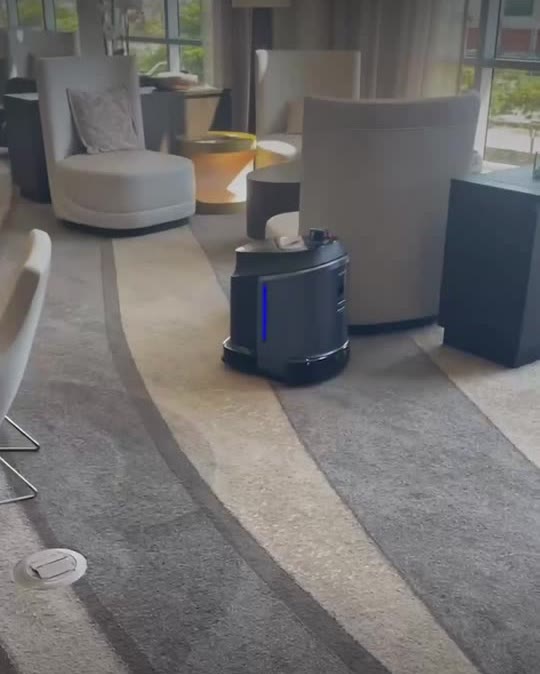 Clean · Deliver
Cleaning and room delivery: scrubbers on lobby and corridor floors, delivery robots on towel and amenity runs.
 Serve · Bus
Servers and bussing: BellaBot carries plates out and dirty dishes back, so your staff stays with guests.
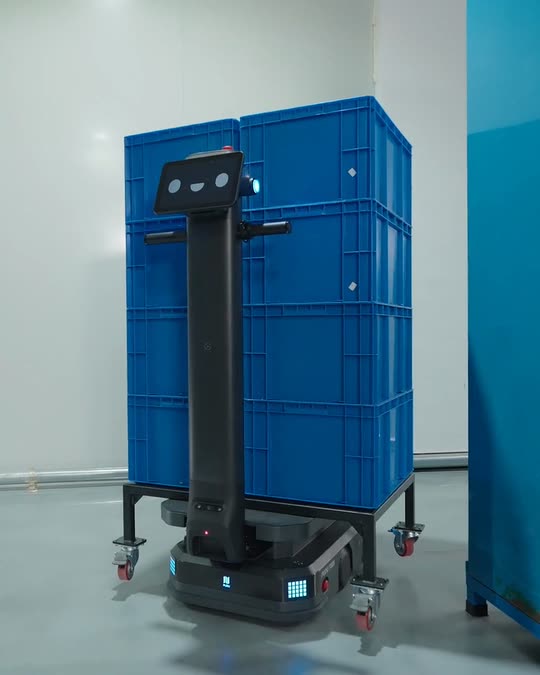 Haul
The Pudu T600 hauls up to 1,300 lb of carts, racks and totes between stations.
 Care · Greet
The Mobii activity table gets residents playing together; temi handles greetings and family video calls.
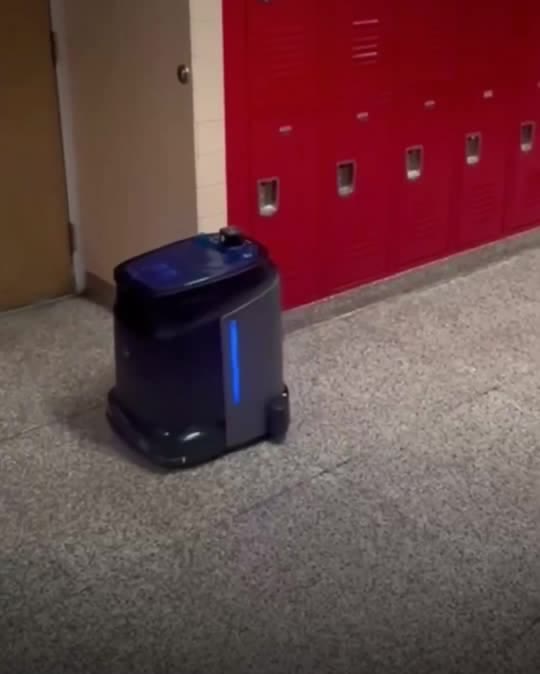 Clean
Autonomous floor scrubbers keep gym floors, hallways and lobbies clean on every shift.
15 minutesFree call
A short, practical call: which robots fit, how to pay for them, and how to get them working before the year-end deadline.
Bring your tax advisor if you like.
Your floors, layout and shifts, matched to the right cleaning, delivery, hauling or engagement robot.
Buying or financing can qualify for Section 179 and bonus depreciation, and our banking partners are lined up to finance your investment. With Robotics-as-a-Service, the payments are operating expenses. What counts: delivery, installation and setup can count toward the deduction, and service plans for equipment you own are generally deductible.
Delivery, mapping and staff training, planned back from the deadline.
From our partner RobotLAB Houston West, Stafford TX.
BookLive calendar
Pick a time that suits you, or ask for a callback. We’ll come ready with the robots that fit your business and the questions to take to your tax advisor.
Free 15-min tax-savings callLive calendar
FAQPlain English
A tax credit cuts your tax bill dollar for dollar. A deduction lowers your taxable income, so it saves you the deduction × your tax rate.
Bonus depreciation and Section 179 are deductions: deducting $100,000 at a 21% rate lowers federal tax by about $21,000.
Generally, buying (with cash or with financing) is what qualifies for Section 179 and bonus depreciation. With Robotics-as-a-Service or a true operating lease you don’t own the robot; the payments are generally deductible as operating expenses as you make them.
Some leases are treated as a purchase for tax purposes, so confirm with your advisor which applies to you.
Generally, no. Financed equipment can qualify: the deduction is generally based on the cost of equipment you’ve bought and placed in service in the year, even while you’re still making payments. Confirm with your advisor. Our banking partners are lined up to finance your investment.
Generally, the equipment’s full cost counts, including delivery, installation and initial setup. Off-the-shelf software sold with it may also qualify. Service plans for equipment you own are generally a deductible business expense (multi-year or prepaid plans are usually deducted over the period they cover), and staff training is typically deductible as a business expense. Ongoing subscriptions and cloud fees are operating expenses, not Section 179. Confirm the details with your tax advisor.
Generally, the robot is set up and ready and available for its job in your business, not just ordered, paid for or still in the box.
To count on your 2026 return, that has to happen by December 31, 2026, so we plan delivery, mapping and staff training back from that date.
Texas has no state income tax, so for Houston businesses the federal deduction is what counts. Ask your advisor about the Texas franchise tax, which works separately.
No. This page is general information, not tax advice. Eligibility depends on your business — confirm with your tax advisor. You’re welcome to bring them on the call.